Some sins cannot be absolved.
The Production History


DAMNATION has roots in Writer-Director Michael Capone's youth in Youngstown, a decaying steel town awash in organized crime.
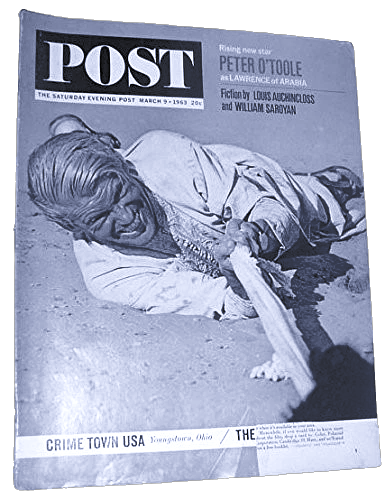
In 1963, following 11 murders and 75 car bombings, it was christened, "Crime Town, USA" by The Saturday Evening Post:
“...buffoons and incompetents succeed to important civic posts. Officials hobnob openly with criminals. Arrests of racketeers are rare, convictions rarer still and tough sentences almost unheard of.”
Born the middle child of five to a Irish/Italian union which shattered when his volatile father abandoned the family, leaving behind the surname of history’s most infamous gangster. One foundational memory was of playing at a friend's house after serving as alter boys. The afternoon was spent rappelling on a rope from the roof of a bombed-out building, swinging into the floors below through broken windows. On the way home, they saw a lanky, flamboyantly dressed man exit a stretch Cadillac, walk around to the opposite side and shoot the driver in the face. Capone was seven years old.
DAMNATION began as REDEMPTION. The ambitious short film was produced at Wright State University while studying under Oscar winning documentarian Julia Reichert. Though production and post were challenging, ultimately it was the financial burden of finalizing a nearly hour long film in the analog age which resulted in it going unfinished. The raw elements languished in storage for decades.
A career in New York City followed, chiefly as a Film and TV Editor, amassing over 60 credits. The pandemic sparked a desire to preserve the many canisters of Fuji Film and boxes of Maxell tapes, which were transferred by Severin Films, who's expert restoration efforts came in lieu of compensation for editing and co-producing TALES OF THE UNCANNY. After reassembling REDEMPTION, Capone attended the Sitges Film Festival, meeting Director Jake West, who he shared the cut with.West thought it held real potential.
Capone wrote a new screenplay, folding the original material in as flashbacks, resurrecting an earlier plan to expand it to feature length. He contacted actor Scot Colford, who'd played the lead. Colford was immediately supportive, eager to reprise his role and served to be a vital collaborator. As was Eric Purtle, who not only returned to his supporting role, but also generously contributed music from his band Minus One. After an extensive search, Nina Pilar was found working at the Red Barn Theater in Key West and was cast as the antagonist. After generously agreeing to fly in from the U.K. to provide location sound, Jake West recommended the talented Cinematographer Vince Knight who agreed to shoot the movie. His wife Karolina also signed on, serving invaluably as crew and playing a small role.
DAMNATION was shot over 10 days in Delray Beach,
Florida and is currently in post production ahead of release.